Cupping Therapy
Written by: Dr. Natalie Kvas, PT, DPT
Why We Use Cupping Therapy in Physical Therapy
At our clinic, every treatment technique we use has a purpose. One of the manual therapy techniques we may incorporate is cupping therapy, which can be an effective tool for addressing muscle tightness, fascial restrictions, and areas of chronic tension.
What Is Cupping Therapy?
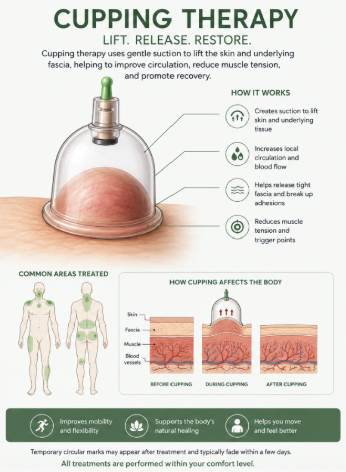
Cupping uses specialized cups to create gentle suction against the skin. Unlike traditional massage, which applies downward pressure into the tissue, cupping gently lifts the skin and underlying fascia. This creates a unique mechanical effect that can help improve tissue mobility and reduce restrictions.
Why We Use It
Many patients come to us with deep tissue tightness that has developed over time due to repetitive movement, poor posture, injury, or prolonged inactivity. We commonly use cupping to address fascial restrictions in areas such as:
Around the shoulder blade (scapular region)
Behind the knee
Across the low back
The neck and upper shoulders
These areas often develop tight fascia and trigger points that can contribute to pain, stiffness, and limited movement.
How Cupping Helps
The gentle suction created by the cups produces several therapeutic effects:
Improves tissue mobility: The lifting force helps separate layers of tissue that may have become restricted, allowing the fascia to move more freely.
Increases local circulation: Cupping encourages blood flow to the treated area, delivering oxygen and nutrients that support the body's natural healing process.
Reduces fascial tightness: The sustained suction can help decrease tension within the fascia and surrounding soft tissues.
Helps release trigger points: By applying an appropriate amount of suction—always within each patient's comfort level—we can help reduce muscle guarding and improve tissue flexibility.
Enhances movement: Many patients notice improved range of motion and less stiffness immediately following treatment.
Is Cupping Right for Everyone?
Not every patient needs cupping, and it is never used as a standalone treatment. Our physical therapists perform a thorough evaluation to determine the most appropriate treatment plan for your specific condition. Cupping is often combined with therapeutic exercise, stretching, joint mobilization, and education to achieve the best long-term outcomes.
Why We Use Cupping Therapy
The suction increases local circulation to support healing while helping release tight fascia and trigger points. Cupping is always performed within your comfort level and is often combined with exercise and other hands-on treatments for the best results.
While cupping may leave temporary circular marks, they are a normal response and typically fade within a few days. For the right patient, cupping is simply another effective tool to help restore movement, reduce pain, and get you back to doing what you love.