
Written by: Dr. Natalie Kvas, PT, DPT
Understanding the Vestibular System: How Physical Therapy Can Help
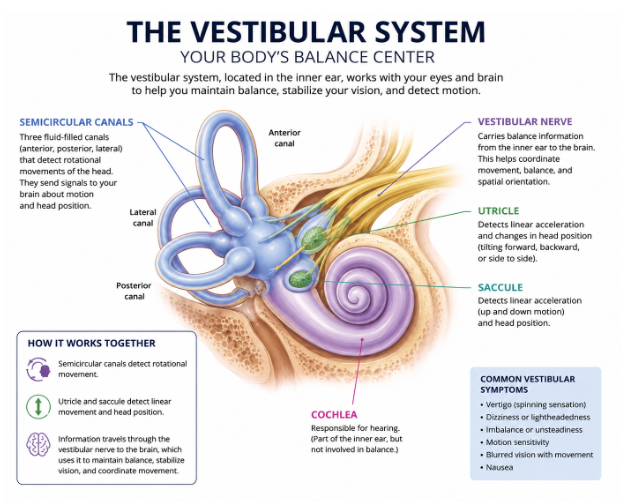
Have you ever felt like the room was spinning, lost your balance, or become dizzy/nauseous when turning your head? These symptoms may be related to your vestibular system—the body's balance center located within the inner ear.
The vestibular system works alongside your eyes and muscles to tell your brain where your head is in space. When this system isn't functioning properly, it can cause dizziness, vertigo, imbalance, blurred vision with movement, or an increased risk of falling.
How Can Physical Therapy Help?
Vestibular physical therapists are specially trained to evaluate the cause of dizziness and balance problems. After a thorough examination, treatment is tailored to your specific diagnosis and may include:
Canalith repositioning maneuvers (such as the Epley or Semont maneuver) for positional vertigo (BPPV)
Gaze stabilization exercises to improve vision during head movement
Balance and walking exercises
Habituation exercises to reduce motion sensitivity
Education to help you safely return to daily activities
Every treatment plan is individualized and performed within your comfort level.
When Should You See a Physical Therapist?
You may benefit from a vestibular evaluation if you experience:
Vertigo (a spinning sensation)
Dizziness or nausea with head movements
Frequent loss of balance or falls
Unsteadiness while walking
Difficulty focusing your vision during movement
Symptoms following a concussion, inner ear infection, or vestibular neuritis
Research consistently shows that vestibular rehabilitation is an effective treatment for many inner ear disorders
When Dizziness Isn't Coming From the Inner Ear
Not all dizziness is caused by the vestibular system. During your evaluation, your physical therapist screens for signs that suggest another condition may be responsible.
Depending on your symptoms, we may recommend further evaluation by your primary care provider, an ear, nose, and throat (ENT) physician, neurologist, cardiologist, or another specialist. Conditions such as vestibular migraine, Ménière's disease, cardiovascular disorders, medication side effects, neurological conditions, or blood pressure changes can produce symptoms that resemble vertigo but require different treatment.
Our goal is not only to treat vestibular disorders but also to ensure you receive the right care for the underlying cause of your symptoms.
At our clinic, we work closely with your healthcare team to identify the source of your dizziness and develop the most effective treatment plan—helping you regain your confidence, improve your balance, and safely return to the activities you enjoy.